WYARA
2022
Hand-embroidered portrait on transparent tulle
One of one · Private Collection
The Beginning
Wyara holds a particular place in my work. It was my first commissioned piece.
Until then, embroidery had existed almost entirely as something personal — something I made simply because I loved the process of transforming thread into an image.
Then someone who had been following my work saw one of my embroidered portraits and fell in love with it. He asked me to create a one-of-one portrait as a deeply personal gift for a woman he loved.
It was the first time another person had looked at something I was creating for myself and imagined it becoming part of someone else’s story.
In many ways, Wyara marks the moment my private practice began to move beyond me.
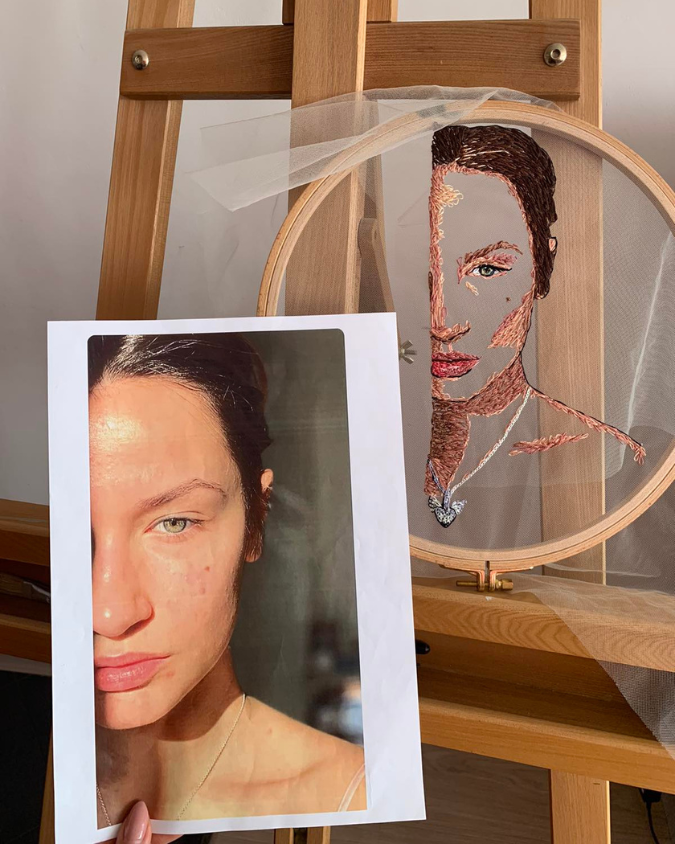
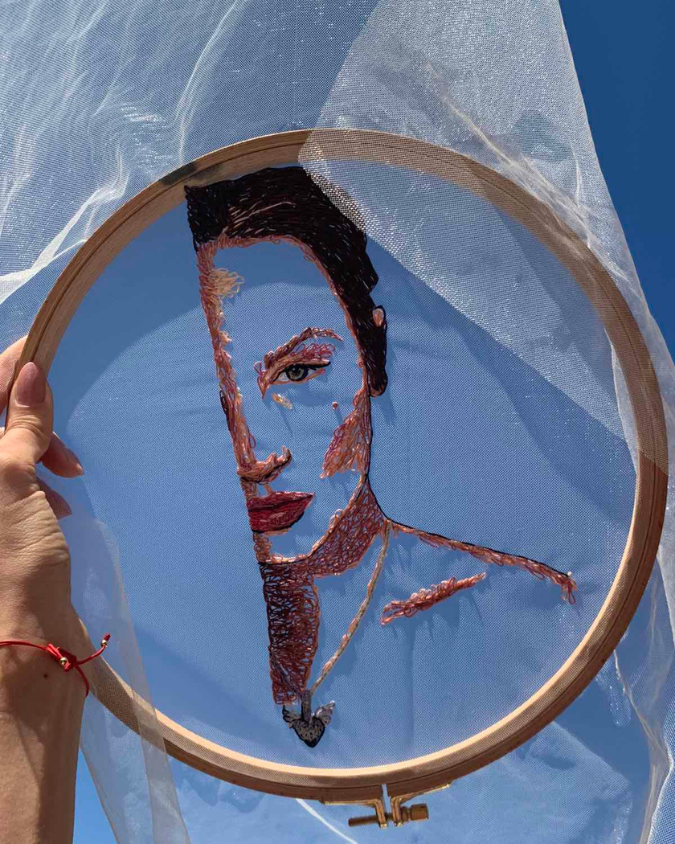
Half a Face, a Complete Presence
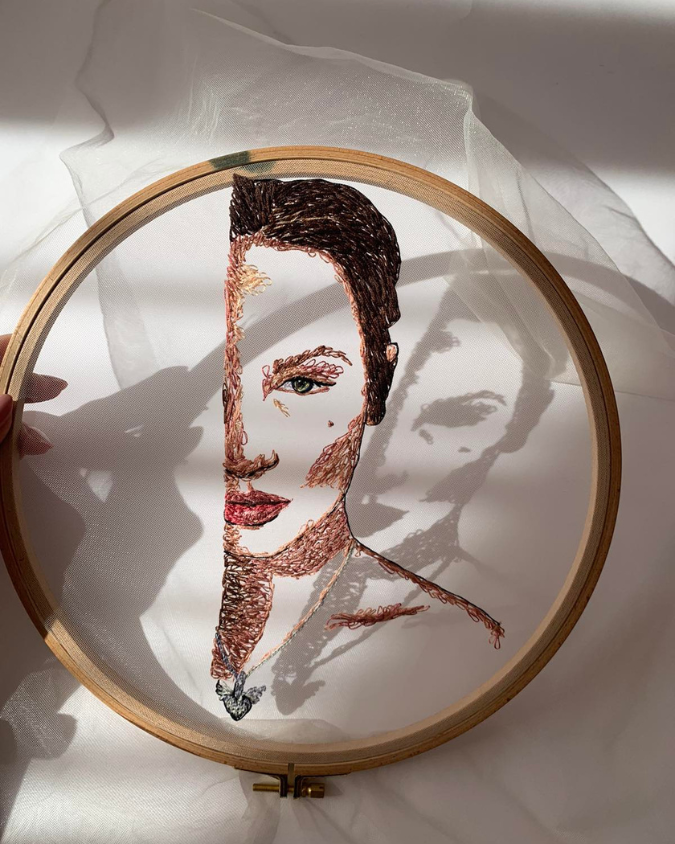
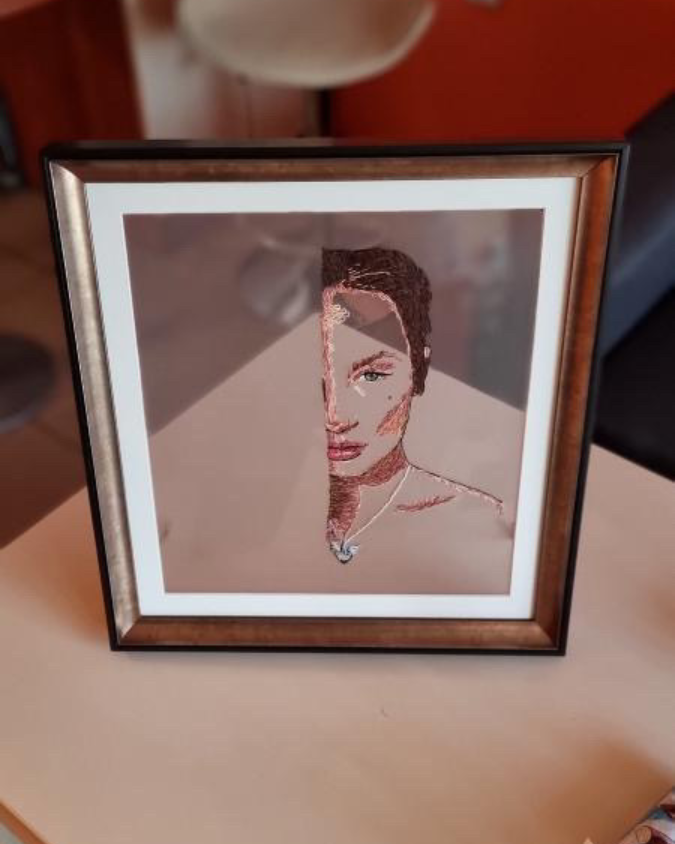
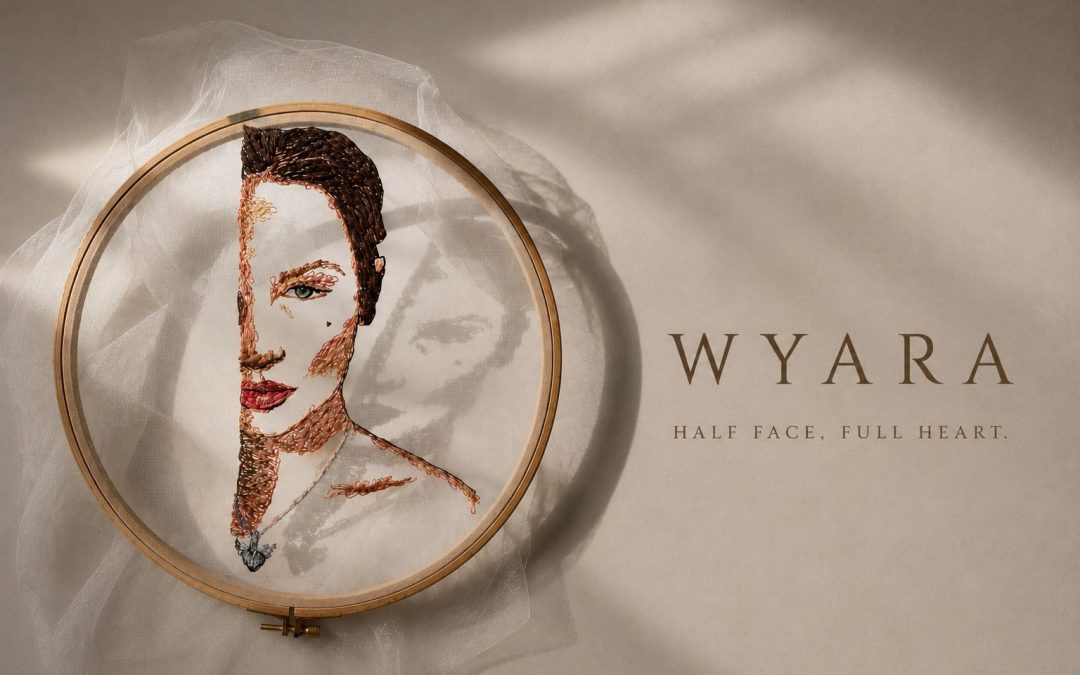
Only part of the woman’s face is embroidered.
The image stops before it becomes complete, leaving transparency where we instinctively expect information.
Yet the portrait does not feel unfinished.
The visible eye, the mouth, the contour of the face and the delicate details are enough for the mind to continue what the thread deliberately leaves unsaid.
That absence became one of the qualities I would later continue to explore in my work: the possibility that what is missing can carry as much presence as what is visible.
The viewer does not simply observe the portrait.
They participate in completing it.
Thread, Light and Shadow
Wyara is embroidered directly onto transparent tulle, allowing the surrounding space to remain visible through the work.
This transparency means that the portrait never exists as a completely fixed image.
Light passes through every open space and every embroidered line, projecting another, softer version of the portrait behind it. As the light changes, the relationship between the embroidery and its shadow changes with it.
The work therefore occupies more than the surface of the tulle.
It exists somewhere between thread, transparency, light, shadow and the space surrounding it.
The First Commission
When I delivered Wyara, I remember watching its new owner see it in person for the first time.
He stopped and looked at it for a long time.
His reaction was something I would hear many times afterwards:
“It is even more beautiful in person. How do you do this?”
That moment stayed with me.
Not because it was the first work I had made, but because it was the first time something created through my hands had left my own world and entered someone else’s.
Wyara became the beginning of a different relationship with my work — one in which these pieces could carry stories, affection and meaning beyond my own.
And perhaps that is where a private act of making quietly became something meant to be shared.
Some beginnings announce themselves loudly. Others begin with a single thread placed in someone else’s hands.